Tuesday, August 7, 2012

Laos Spider Symposium

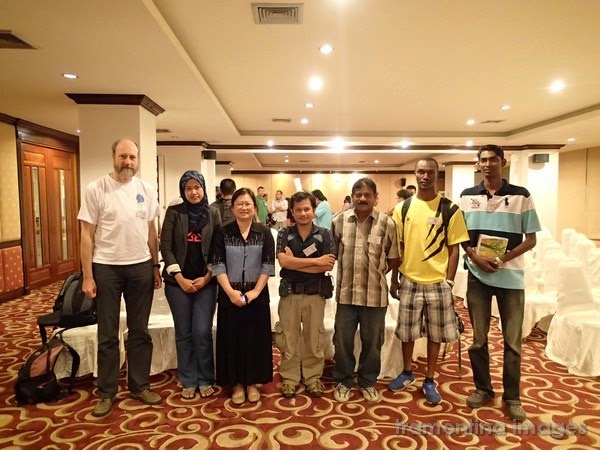
The good people at Senckenberg Institute will be hosting a symposium in Laos from 12th to 15th November 2012 which will be themed on the spiders of grether Mekong. I expect this to be an educative meetings among arachnologists and spider enthusiasts who are looking at the South East Asian region.

There will be several presentations and posters on spiders. Further details can be seen from the symposium's website: http://www.senckenberg.de/root/index.php?page_id=15244

Entrance is free but you have to arrange for your own travel and accomodation. The host, Dr. Peter Jaeger, can be reached at peter.jaeger@senckenberg.de if you need his help in securing a place.

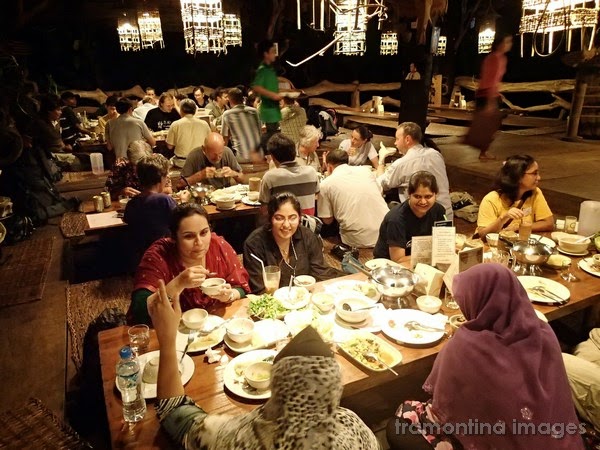
From 16th-23rd you can join scientists in a series of workshop and excursion in Tad Itou. This is how the place supposed to look like.


Dorm rate is USD10/night and nice room at USD40.

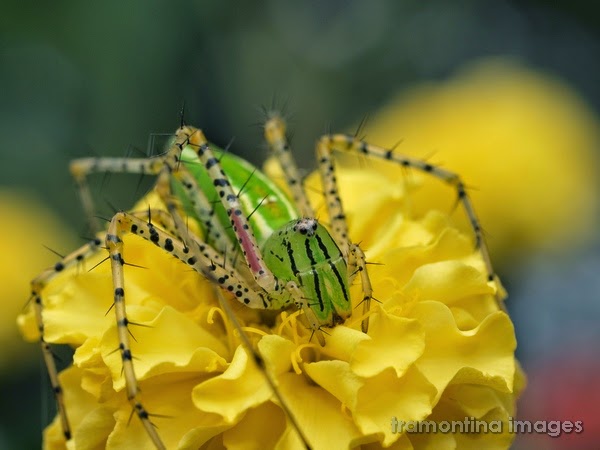
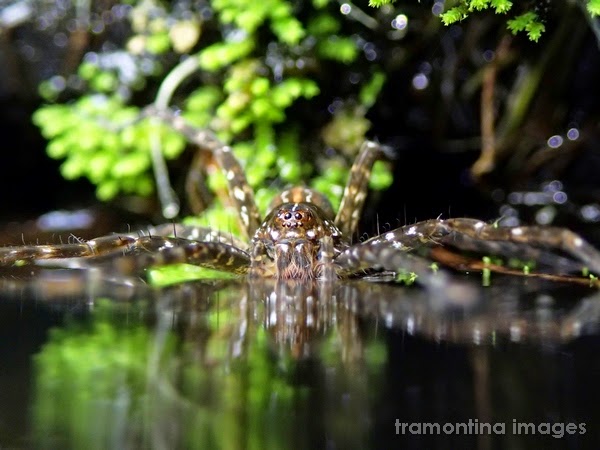
I will be presenting on spider photography and spiders which might be of medical interest.

Friday, January 27, 2012

Gea spinipes


This is a rather common spider found around grasses and low shrubs. Their webs are hardly more than 1 foot from the ground, often decorated with stabilimenta. The genus Gea (family Araneidae) is closely related to Argiope (often called St Andrew's Cross) and the more uncommon Neogea. Females can reach up to 11mm which makes them easy to spot and photographed. Sexual dimorphism is not as extreme although males are significantly smaller.

This spider has an extensive range throughout the tropics with records even in India. I often found then in large numbers among long grasses along trails, even nearby human settlements. Approaching one is considered easy as they do not easily startled. At most, the spider will move to the other side of the web in a flash.


So far I found them to be diurnal. They are especially easy to find in the morning following a raining night. The webs will be covered with water droplets, making them visible from quite a distance.


This one was seen moulting during daytime, about 11am or so, in a forest not far from Kuala Lumpur.


Small flying and hopping insects seem to be their main prey. Usually I found plant hoppers being caught and in one incident I saw an Aedes mosquito being devoured.

A contrast in size between sexes can be gauged from the video below.

video

Friday, July 1, 2011

The 1st South East Asian Spider Workshop


The notion to organize this event came following the visit of a delegation from the Faculty of Medicine in Universiti Malaya to the National University of Singapore earlier this year. Then the team of Dr. Noraishah Abd Aziz worked on putting up a workshop to congregate spider academicians within our region. We had 2 renowned professors from NUS- Prof Gopal (as seen on NatGeo) and Prof Li (the spider behaviour expert) who shared their expertise with the participants. Dr Noraishah and me put a presentation on the last day on the gene expression of spiders.


Prof Gopal shared the biochemistry of toxin and how the venom from spiders can be valuable to sciene. Apparently its venom, after isolation, can have a selective effect on certain ion channels in human nervous system. With further research, crucial drugs with little side effects can be developed. An example of established venom-derived drug is Arvin which was taken from the Malayan pit viper.

Prof Li Daiqin showing spider morphology as seen through a microscope connected to LCD screen.

Prof Li and mosquito entomologist Mr. John Jeffrey. Behind is Dr Lau (UPM) and Syuhada (UM-ISB).

The next day we looked at spider morphology and flourescence under conscopic microscope. Prof Li, who published a paper in Science on the latter subject, gave a lecture on effect of UV reflectance in spider courtship behaviour. In the evening we had a field trip to look at nocturnal spiders in their habitat. We went into the forest at 9pm and came out slightly after 12 midnight. Some of the spider we encountered are shown below.


 Araneidae.

  
Caerostris sumatrana.


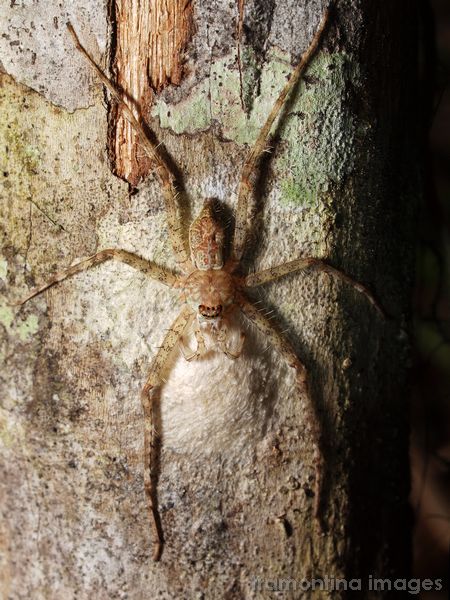
Pandercetes sp. guarding egg sac.


From Left: Mustakiza, Syuhadah, Prof Li, me and Azmizi. 

On the last day of the workshop we looked at gene expression of spider. The model chosen was the local Pardosa wolf spider and we saw the development of spider embryo from newly a fertilized egg well into the fetus. The application of this study is immense since this is where the biological blueprint resides. It's like playing lego.

We are looking forward to have more such event to be organized in Malaysia as it gives the room for researcher with common interest to communicate freely. It may not be something which brings in foreign investment or spur the country's economy directly but is certainly an area where we have a lot of room to work on the research. If we are to become a knowledgable society, then we must not stress only on immediate financial gain. While this kind of study might not directly produce extra income to the country, it can contribute to the prevention of deaths from vector-borne disease and disaster by crop pests. Fundamental scientific studies need to be done before we can tap such knowledge for applied science to start working, not the other way around. This is the kind of development our country needs, even more than new condominium projects.

Sunday, February 6, 2011

Macro Photography Workshop

Meet me in person this Saturday!


I will be conducting a mini workshop on macro photography on the 12th February 2010. It will be held in Fototeacher training center in Megan Phoenix Cheras. You may refer to http://fototeacher.com/MacroPhotographyMiniWorkshop.html for more details on registration.

Among the topics I will be delivering are:

1. Macro photography equipment with DSLR.
2. Basic camera settings and techniques.
3. Basic lighting system.
4. Case studies on how I photographed some award winning macro photos.

The workshop will be delivered in Bahasa Melayu. Please register early to get a place as seating is limited.

Tuesday, December 28, 2010

The Tropical Undergrowth World Through E-5

Part 4: Night Macro

Another long delay was inevitable as something unexpected happened to my family.

I have been doing macro both daytime and at night for some years. There are several reasons why night macro is preferred- nocturnal animals go out at night and they are less sensitive to human presence. Some more it is cool, atmosphere wise of course. The not-so-good thing is, of course, the lack of available light. This means focusing will require assistance from a light source such as a torch light. Unless you have a DIY torchlight holder like what my friend Benten has created, you will need the left hand to hold one. This leaves only your right hand to hold the camera.

By holding with one hand we have several issues- weight and stability. E-5 is a heavy camera by Olympus standard, almost double my E-500. For someone like me, I cannot hold it with one hand long especially with a flash unit mounted. Especially the STF twin flash. What saved me was the fabulous ergonomics of the camera and the built-in stabilizer which I supposed helped to compensate hand shake. While we might not be dealing much with image blur due to shake, getting the focus shifted is a major problem.

The great thing about E-5 for night macro is its autofocus system functions very well, both S-AF and C-AF even under low light. Even with the dreaded Zuiko Digital 50mm f2.0. It tracks better with ZD 50/2 compared to E-500 with ZD 35/3.5. This allows great macro opportunity when we are dealing in very tricky situations whereby older cameras tend to cause the lens go hunting.

Due to limited time I only tested the E-5 at night twice. Here are some of the better photos taken when the MyChiaroscuro Olympus-user club had a night macro safari.

Some kind of treehopper only found at night. See how well the highlight was controlled even when obviously flash was used.

A pholcid spider with eggs. Again we see the reflective-prone eggs have sufficient dynamic range while the leaf at the back is well illuminated.

 A very small crab spider (Thomisidae) with rich texture on its body and legs. The textures are well rendered with amazing clarity.

An excellent case study of how the E-5 controls the dynamic range to avoid blown highlights. Even in this low-res 600 pixel photo you can see the hairy texture of this poltys spider's abdomen and legs.

 Some kind of lizard I saw. Not my favourite subject but the scaly skin is a good test for finding excessive moire.

Hersiliid a.k.a. two-tailed spider. Can't say much on this photo but I think people would agree that if a camera can take this kind of photo, it is definitely a really good one.


OK. I find myself boring because I have been doing nothing but praising the E-5 since the beginning. No, the company didn't pay me. All I got from them was a few A4 papers with some marketing points. Frankly I am was very skeptical when the specs of this camera were released as it was the most lackluster model other than the E-450. What impressed me later was the immense improvement of image quality and AF system. Not saying the other models have low IQ, they are all good but this is a huge leap altogether. The AF performance in E-system cameras have been badly ridiculed for ages especially in low light. I hate them when shooting indoor. Now E-5 provided the answer needed.

Bad thing? Haaa... now we get things more interesting. Other than weight, I didn't have much time to find other weaknesses. Probably size is a bit of a problem to me since I cannot reach some of the buttons with my right thumb as easily as I did with E-500. But you see, I am a small person weight 50kg.

For a hobbyist, you cannot go wrong with this camera provided money is not an issue. It allows you access to the exotic Zuiko Digital lenses which are known to provide extremely high resolution and very impressive MTF behaviour. You can use the only two f2.0 zooms in existence with this camera. If your concern is about available lenses, just check out the Olympus website for the line up. Note that the company recently announced that they are not looking at developing new 4/3 lenses at this time so stop hoping for new ones to be released. This disappoints me as it means the planned (since 2007) 100mm macro lens will not see the light of day as of now.

Is this camera good for newbies? If you got the money, yes. It is not so complicated to use and definitely more than capable of producing great photographs. By now there are a lot of E-5 owners sharing their works on the web. Go google up and judge for yourself.

For E-5xx users, this is a very useful upgrade from your dinosaurs. You will love the new features (not really that much) and the excellent AF. The 12.3MP is reasonably high although not the best in the market. Most of the improvements are very helpful in making great photographs easier to take. If your AF tracks better, the image is sharper, the dynamic range higher, then this is pretty much settled. For those who are considering jumping to D300s or 7D, give a shot at E-5 and then only decide. Don't be a sensor size paranoid.

For E-3 and E-30 users, the upgrade is still very substantial. In fact most people I know who ordered the E-5 belong to this group! Ok, financial muscles aside I give the benefit of the doubt that they find the improvement to be worth the upgrade rather than jumping to another boat. I have been using E-30 for the past 1 week, courtesy of my friend Khairul, and would say the AF performance in E-5 is noticeably better. Even the IQ is better although both are using the same sensor.

For potential ship jumpers coming to Olympus, do study the E-system closely before fire selling your gears and buy the E-5. If you do that and still jump, you will appreciate this beast better. You will get to play with Zuikos but will lose great HD video (E-5 runs on 720 HD with noisy AF motor) and 5-figure ISO. I cannot comment much on the usage of other systems but one thing I take note is the colour. You can't beat Olympus' colour.

Thursday, November 11, 2010

The Tropical Undergrowth World Through E-5


Part 3: Daylight Macro

I apologize for the delay. Just after I published Part 2 I shifted my house to Puncak Jalil, a nice double storey link facing a small hill with a water tank. The property agent said since the front door is facing south, I should get good feng shui. What happened was TM did not reconnect my broadband until almost 2 weeks. I have called them relentlessly after the 5th day we made the request for line transfer and after a lot of BP-rising and saliva-spitting complaints, I am back online. I am waiting to hear what the TM Point GM will say about this, as she told me last week she would.

What makes a good macro machine? There are several attributes which I would put-
1. Good low ISO performance.
2. Lightweight.
3. High megapixel.
4. Low moire.
5. High flash sync.
6. Natural colours.
7. Rugged.

I am not including the obvious ones such as image quality since it is so obvious, we would not be considering something which cannot meet such basic requirement. By the way, I wrote about this earlier and the E-5 got my applaud.

It is obvious that any amount of noise will reduce the quality of a macro image, henceforth we normally shoot at low ISO. So we are more interested in the performance in the range of ISO100-400 rather than peeping the ISO3200. Here the E-5 does exceptionally well where the low ISO range is virtually clean. The weight, on the other hand, is rather on the high side and using it without a support can be draining unless you are used to it. But my concern is the twitching of fatigued muscles while trying to lock focus which induces tremor. The megapixel at 12.3 is adequate for cropping although we hope to see something bigger in the future. Yet we rather have a clean 12.3MP than a noisy 16MP.

Moire is a major bane in macro. It just makes nice photos turn bad. The moire level in E-5 is acceptable even at such high image resolution (these two tend to be proportionate), probably due to the power of the new Truepic V+ engine. They told us it works and from what I see, it did. At 1/250s flash sync, this is very good indeed for some of those high speed macro actions. Well, I can get 1/320s with a 3rd party manual flash on my E-500 but the output is not as consistent. With E-5, the TTL was very accurate.

Getting the right color in macro can be forgiving and tricky at the same time. Since we don't deal with human skin tones, there is no proper benchmark to tell if the color of a particular frog is right or not. You can easily get away most of the time. What makes it tricky is if the hue of the subject is not tally with the background or other minor subject. Even worse if you are doing species identification where accuracy is paramount. The E-5's natural color with just the right hue is a great relief, in fact that is expected since all the previous E-system models have proven to give such natural colors without being too pale nor overly saturated.

The last attribute is sort of a paradox. How could you expect a lightweight DSLR to be rugged at the same time? Either way is good, having both is heavenly (remember the OM-1?) and neither is definitely not appealing. The significant advantage of a camera built like a tank is that it allows you to capture nature's masterpieces which otherwise would require special protection, which i turn is definitely going to be cumbersome. Imagine photographing an adult mosquito emerging from its pupa. The most dramatic angle is to shoot it from almost the same level where part of your lens will be submerged. This also increase the risk of the whole equipment and the photographer himself being submerged by accidental trips. Now imagine doing this with a weathersealed lens and body- the big worry is reduced hence the photographer can have more freedom to exercise his art.

Sorry, I was too engrossed in resuming this review that I went on writing without considering how to link it with photos. OK, back on the ground, I will explain how these photos were taken with the E-5, STF-22, EC-14 and ZD50mm f2.0 on manual mode.

The mantis nymph. 1/160s; F/13; ISO250.
This was taken at a public park with plenty of distraction such as kids playing soccer and adults jogging wearing bright colored shirts. To isolate potential disturbing background, I shot this upwards with the sky behind. The flash gives excellent front fill while keeping the sky blue. Nymph mantis is not the most cooperative subject so I chose this photo out of some 20 frames since it shows the most decent pose.

With the lighter E-500, I can have more freedom to poise the camera in awkward positions to get these things right: mantis head facing forward, no leaves obstructing, sky without clouds and ugly tree silhouettes, flash not blocked, flash direction not creating excessive highlight and most important is to get the focus right (while keeping my breath to reduce body tremor). Yes, I used autofocus with 1 active point at the mantis' eye. But the extra weight of E-5 is a disadvantage, comparatively. But not all is lost since this shot was actually taken without using a tripod or monopod. The image stabilizer is proven to reduce the effect from tremors. Even the advanced autofocus system which locked rapidly allows for a significant shorter period of trying to get the focus right, reducing the compounding effect of body tremor drastically.

Don't you just love the colors? I only raise the curve slightly in CS3 without any other post processing tweak. Nope, nothing else at all.


Female jumping spider (Siler semiglaucus) eating an ant. 1/250s; F/13; ISO100.

The female S. semiglaucus is a very attractive spider and is a darling to any macro photographer. Unfortunately she is rather very small and always on the move. I was lucky to find one with a prey- an unidentified (to me) black ant. S. semiglaucus is one of the few species of jumping spiders which are known to prey on ants. The beautiful pattern on her abdomen is an ingredient for a great photo but the problem is with her white pedipalps. If you are shooting from front, you are bound to get some highlights there. If you are shooting her eating, you cannot run away from doing that.

Peeping at 100%, we can see some details are lost. I admit this photo was a bit overexposed so just imagine how it will be at -0.3 EV. What can you see here? Although some part is blown, the overall details are intact, more than enough for a photo taken around 1:2 magnification. Let's be frank, there is no sense in being so meticulous up to the point we want to see every single hair strand. Drop the EV more and I might get some more texture on the pedipalps but at the expense of the black ant. Here the dynamic range is sufficient, in fact very comparable to anything else in its class. To get significantly more DR, use film.

One thing I like about this shot is that I managed to hide the evidence of using a twin flash. Somehow I hate its reflection on the subject's eyes which looks so unnatural.

If this looks softer at 100% compared to the girl's finger in Part 1, it's probably due to the magnified tremor at macro level and the fact I was using the EC-14 teleconverter.


Lynx spider upside down. 1/250s; F/13; ISO160.

Lynx spiders (Oxyopidae) can be very sensitive. Some species, such as this one, have far visual range and will run away when a photographer approaches. They are so agile than once they run into the foliage, it is extremely difficult to detect them. This female thinks she found a secure hideaway underneath a leave.

I noticed that they respond mainly to movement. Once you are close enough and do not make any obvious movement, you are close to invisible to them. This gave me the opportunity to shoot at various angles.

Almost the entire body is in focus. This is not a flat side profile shot as I want to emphasize on the face a bit hence sacrificing part of the tapered abdomen end. I am not really fond of this leg formation as it looks awkward but this is natural for a wary spider. In a more neutral situation, she will have the body pressed lower to the surface and legs pointing forward. The current position, however, makes photography difficult as you cannot get all the legs in focus.

From here the colors are just great, the details are great, the dynamic range is great, so what else there is to say? You don't see noise at the shadowed area. No visible moire. Very sharp. The only setback is perhaps my artistic taste which may not be everyone's cup of tea. But that is a variable on the photographer and as far as proving what this camera can do, it is of little relevance. If it gets the job done, it's worth it. By the way, quite a number of people did say my taste is ok. To them at least.

I wonder if anyone wonders if I used the swivel live view to take such shots with difficult angles. No, I didn't. I am used to using optical viewfinder and I get better intuition when looking straight with the camera in between me and the subject. But these reasons are due to my lack of familiarity with that feature. I did try using the live view a few times and abandoned it for 2 reasons:

1. It will take me more time to get familiar with it up to the point I can use it comfortably. With the limited time I have, I rather explore other potentials than trying to master a new skill.

2. The dreaded shutter lag is there. I don't know much about the lag of other DSLR but the outdated E-330 seems to score higher points here. When doing macro I cannot afford any lag. Even a slight delay may likely cause a shift in focus when we are in the realm of very shallow depth of field.

But it is too harsh to criticize a feature I haven't fully explored yet, especially a feature that can be so helpful in macro works. My wish is Olympus will explore a more functional live view system, one which has reasonably fast autofocus and release the shutter without significant lag. This alone will propel the usability of this feature in many new applications. In other kind of photography, this is probably not even an issue at all. For example if we take candid photos of people in an event, a swivel-LCD live view of any level of shutter lag is simply a gift from the heavens.

So how do I find the E-5 so far? Good enough to say that I want one. Quite badly.

Next part will be out in a few days.


The top photo of the flies having a good time was taken in daytime but with flash and the background was far away, showing only black. Although it was shot with exactly the same setup, it was there as a lure instead of a case study.

Tuesday, October 19, 2010

The Tropical Undergrowth World Through E-5

Part 2: Moulting Series
One of the more difficult scenes to photograph is the moulting process of a spider. First thing, it requires a lot of luck, patience and scouting skills to witness a moult in process. Spiders are very vulnerable during a moult where even a slight disturbance can disrupt the process which may be fatal. Therefore they tend to moult at times and places other creatures can hardly notice.

Next, an orb-weaver is more difficult to photograph while moulting since they tend to hang by a single thread during the process. Even the slightest breeze will swing it which makes working in a very tight depth of field feels hellish. Even worse if the spider we have is tiny, for obvious reasons.

In the past I have photographed several moults of orb-weavers and usually I will take home about 2-3 good images at best. All are quite sizable, at least 10mm in body length. While looking for a candidate as my glamour macro model, I found a very tiny orb-weaver preparing for a moult. He was so small, some 5mm, which made me think for a while whether this thing is worth the trouble. This thing is small, an orb-weaver and there was gust every now and then. Good combo. It was like some kind of a prank- you get what you want but it won't be that easy.

With me was the E-5, Zuiko Digital 50mm f2.0, EC14 teleconverter and the STF-22 twin flash. I cut some used Styrofoam padding to diffuse the flash heads, tied with rubber bands. The settings are nothing amazing- manual mode with 1/200s, f13, ISO100 and the flash on auto TTL. This is my standard default setting with the E-5 with some parameter adjustment if the need arise. The setting was good enough for this situation but something else was bothering me- the wind gust.

The moult was happening at the outer part of a shrub, easy enough for me to poke my gears at it. But this also makes it susceptible to air movement. The tiny spider was rotating slowly and at times swings between sides. It was almost impossible to lock focus manually, especially with my left hand holding a torch light. I switched to continuous AF and used a single AF point to lock it.

Each of the 11 AF point of the E-5 has twin cross sensors, something like 4 sensors in each point. This makes it very sensitive and very accurate. The C-AF managed to track the constantly moving spider and fired away a burst of shots, retarded only by the recycling of the STF-22. I missed quite a bunch since it was REALLY NOT EASY to track down such a rotating tiny thing through a viewfinder over such a shallow depth of field. But the shots that made through were simply astounding.


Don't you just love when it rotates? Grrrr...

From this case study of shooting a moult with the E-5, let us look at how much helpful it was. The trickiest thing about this was to take the shots while not disturbing the spider. I will need to be at a comfortable distance from it, not touching any leaves that would stir the thread it was hanging to, get a good angle with a pleasing perspective and acceptable background, hold my stance firm and track the instantaneous position of the spider (yeah, thank you so much Mr. Wind). Oh, and don't forget I had the hunt-prone 50mm f2 mounted with EC14. At this point, worrying about the camera setting was insignificant as this should have been sorted out earlier. The E-5 tackled these issues like a professional camera it is meant to be.

Firstly the C-AF was very reliable even at such precise focusing distance, such low light and such lens. If I were to do the same with my E-500, the success rate would drop significantly. I will still get some good shots but not as many and will have to work harder. In fact I doubt that the 50mm f2 can pull such task with the E-500, which was why the 35mm was my primary macro lens.

Secondly, the 12.3MP means there are plenty of room to crop. For typical macro shooters, you don't need further explanation. As for the rest, it is simple to figure out why.
Thirdly, the ergonomics of the camera was very good. It balances well and the grip was solid. Unlike other entry level 4/3 DSLRs, the E-5 comes with a larger optical viewfinder which is a blessing when taking such photos. I did not use the live view since I am not used to it and the fact that there is some shutter delay involved. Just how conservative I am.


I have to give some credit to the STF-22 which made my life easier. Shooting between the leaves have always been painful for my DIY flash bouncer and the twin flash just made this so easy. The flexibility on controlling the power ratio and flash angle was instrumental in making the above shots becoming like what they are. It also resulted with less weird shooting stance.

Now let's talk about the weight factor. Holding the whole setup hand held was quite a challenge, specially for me who is spoilt by the marvel of E-500 (435g) with ZD 35mm (165g) and Cybertik MZ-45 flash (270g without batteries). But frankly, it was worth the extra calories burnt. The set back was that I cannot hold it steady as long as the lighter setup due to increasing tremors as my muscle experiencing fatigue faster. I suppose a bit of dumb bell workout and breathing exercise should mitigate that to certain extent.

Every part of a camera review needs a conclusion and the verdict is simple. I find the combo of E-5 with STF-22 is well worth the extra weight due to its vastly improved functionality which makes life simpler. Well that's the whole point of spending money on new gears, other than to impress girls. I am not even talking about image quality here, which is obviously superb, but just to point out how much the new AF being helpful, compared to ummm... the E-500. Of course there are other systems which have similar or even more advanced AF capability but sometimes I wonder why many of their users rather use manual focus when doing macro.

I will write about image quality in the next part with more photos as case study materials.


Note: The spider is a male orb-weaver of family Araneidae. The gender identification is from the swollen pedipalp. He completed the moult successfully in about 10 minutes after which he went off deep into the shrubs.